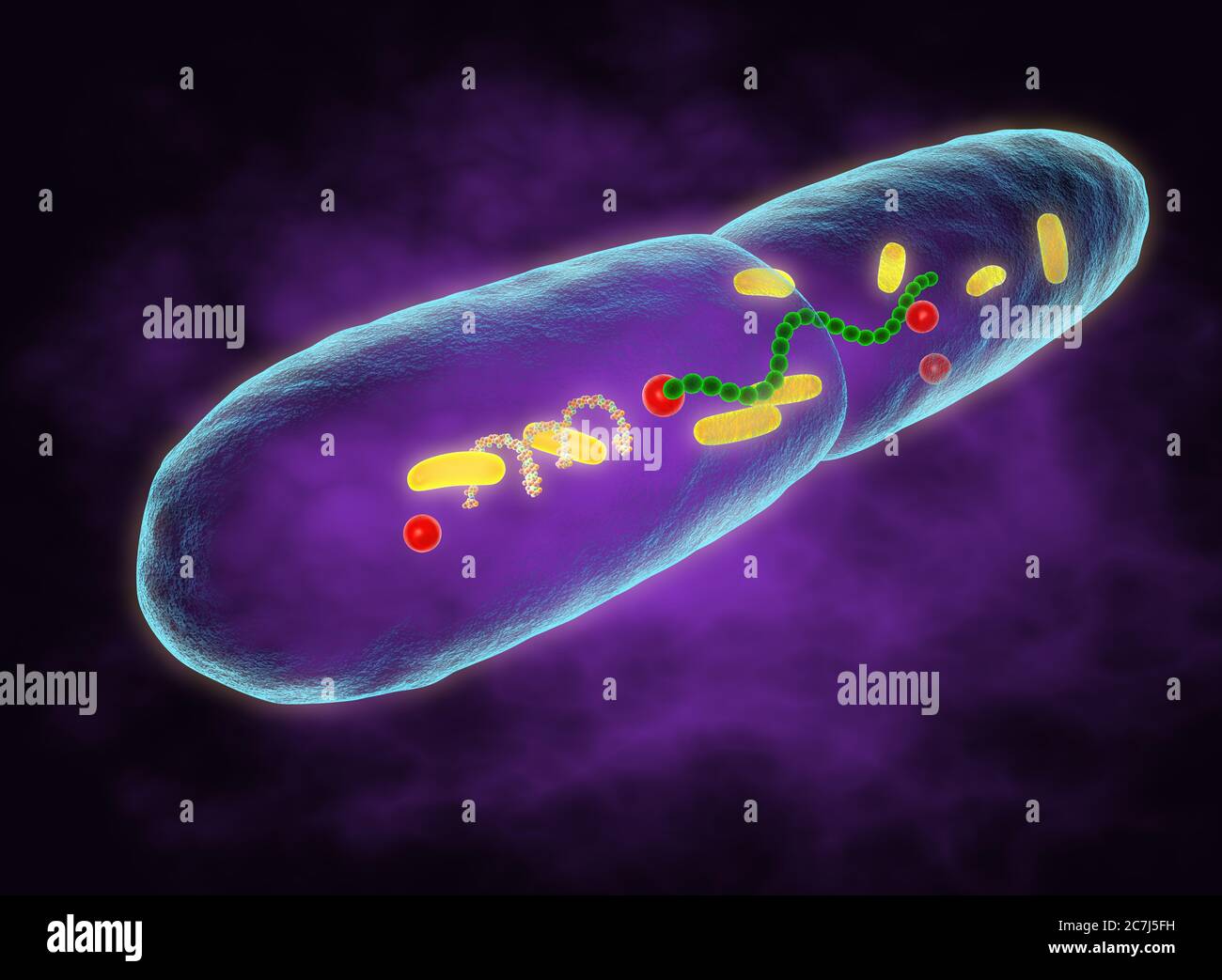
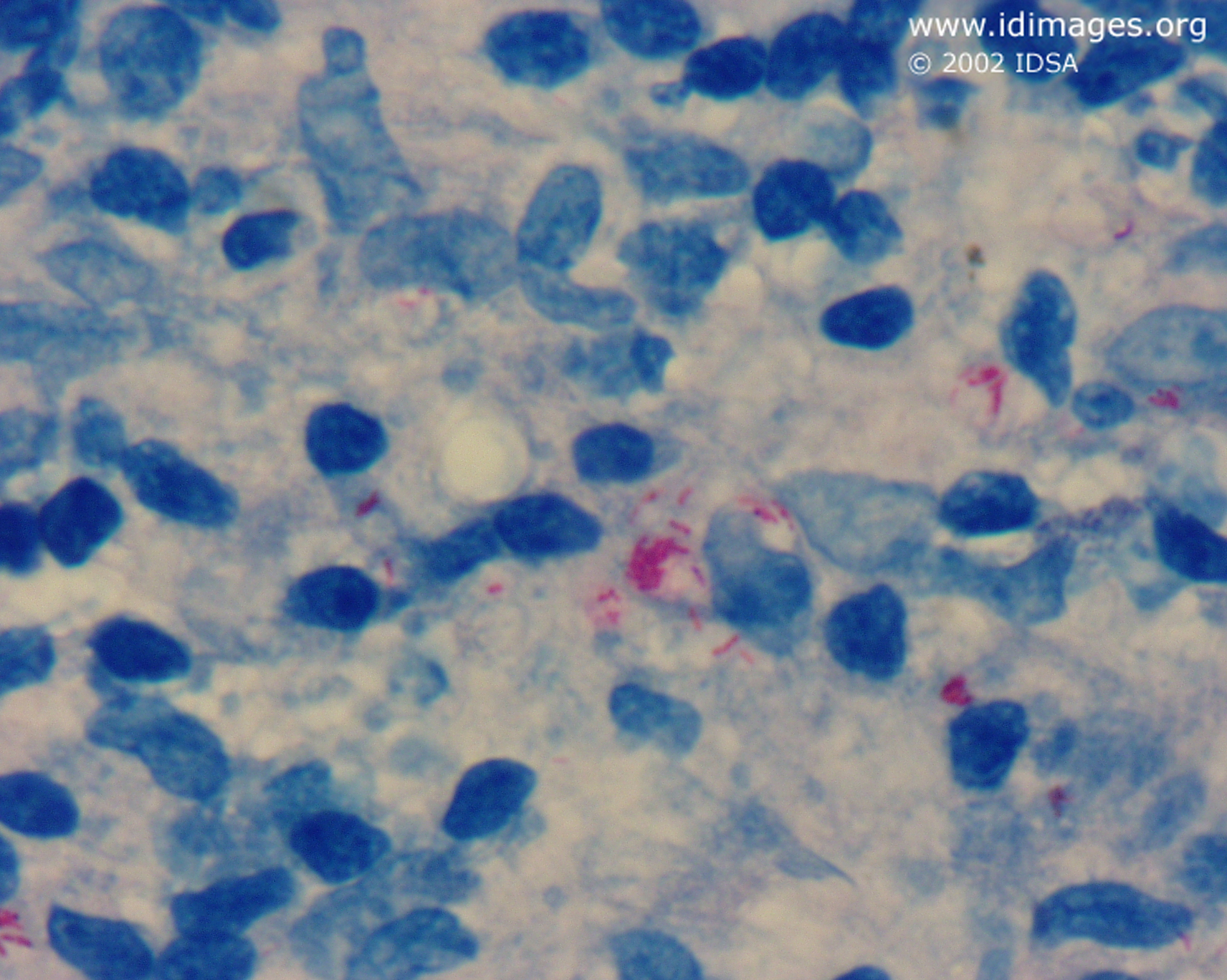
Mycobacterium lepraemurium is a causative agent of feline leprosy. It causes granulomatous lesions, characteristic of the Mycobacterium genus.
Description
Gram-positive, nonmotile and strongly acid-fast rods (3-5 μm long). Slightly rounded ends.
Colony characteristics
- Rough nonchromogenic colonies.
Physiology
- Growth on inspissated 1% egg yolk medium at 30 °C - 37 °C within 4–5 weeks (using large inocula, confined to a concentrated area of the medium, egg white is inhibitory).
Pathogenesis
- Cause of endemic disease of rats in various parts of the world, as well as feline leprosy.
- feline leprosy is transmitted by bites from rats and other cats.
- Disease occurs mainly in the skin and lymph nodes, causing induration, alopecia and eventual ulceration.
- Nodular lesions, involving subcutaneous tissues, may be solitary or multiple and usually confined to the head region or the limbs. Nodules are fleshy and freely movable.
- Surgical excision of the lesions is the preferred treatment.
- Only the densely and uniformly stained forms appear to be infectious for animals, in contrast to the degenerate unevenly stained forms.
- Biosafety level 2
Type strain
None specified due to difficulties in cultivation.
References